Have I Read This Movie?

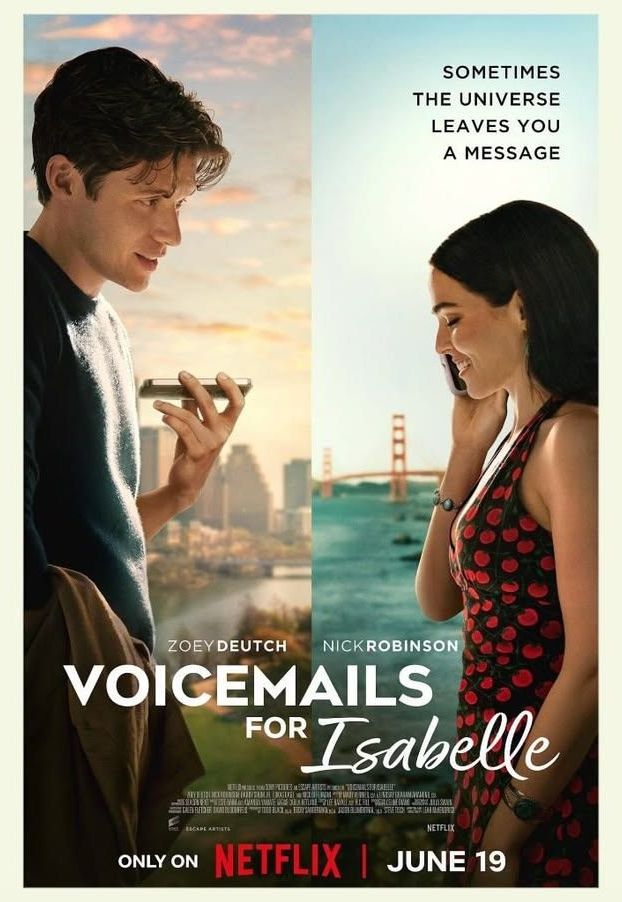
I started watching Voicemails for Isabelle on Netflix this evening. I was in need of a calm romcom and a few hours of entertainment. What I didn’t expect was the nagging feeling that I had somehow read this story before.

A few scenes into the movie, I found myself mentally flipping through the shelves of books I’ve read over the years. I kept asking myself, “Where have I read this before?”
I didn’t have to go too far. The book sat in my recent reads.

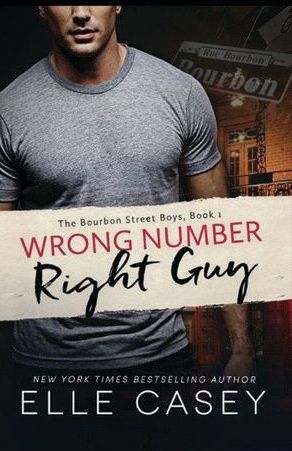
Wrong Number, Right Guy by Elle Casey.

Now, to be clear, Voicemails for Isabelle is not an adaptation of Wrong Number, Right Guy. The plots are different. The characters are different… But the emotional experience of the two stories feels remarkably similar.

Both stories revolve around a connection that begins indirectly. In Wrong Number, Right Guy, a mistaken text message opens the door to an unexpected relationship. In Voicemails for Isabelle, voicemails become a bridge between two people. In both cases, words create intimacy before life catches up.

There is something uniquely romantic about getting to know someone’s thoughts before fully knowing the person. Messages strip away appearances, distractions, and first impressions. They allow vulnerability to arrive first.

That is what I recognized.

Both stories capture the anticipation of waiting for the next message. The curiosity of wondering who is on the other side. The comfort that comes from being understood by someone you haven’t fully met. The emotional connection develops through conversations, not circumstances.

As readers and viewers, we’ve seen versions of this trope many times, but when it’s done well, it still works. There is something timeless about two people finding each other through words.

The more I watched Voicemails for Isabelle, the more I realized that what felt familiar wasn’t the storyline itself. It was the emotional rhythm. The same rhythm that made Wrong Number, Right Guy so engaging.

The movie wasn’t a book I’d already read. It simply reminded me why I love reading them.

Have you ever watched a movie that felt so familiar you were convinced you’d already read the book?
Why Choose?

I have been reading romance novels since I was a teenager…

I didn’t even know this was a thing.

Somewhere along the way, quietly and without any fanfare… the “why choose” trope found its way onto the shelves, built an audience, and settled into its own space in the world of romance… and I completely missed it.

From what I’ve now come to understand, the idea itself isn’t entirely new. Its roots stretch back into earlier romance (especially in fantasy and paranormal spaces) where a woman might be surrounded by multiple love interests, where each interest offers something different. But in those stories, there was almost always a final decision. A choice had to be made. One stayed, the others faded away. That was the rule…

Then something shifted. I have come to learn, that in the early to mid 2010s, particularly within indie publishing spaces, writers began to experiment. They questioned that rule. What if she didn’t have to choose? What if love didn’t need to be reduced to a single outcome? And just like that, without asking permission, the trope evolved.

My research tells me that by the late 2010s into the early 2020s, it had fully arrived. Not just as an idea, but as a recognized and named trope. Platforms like Amazon Kindle Direct Publishing and Wattpad gave writers the freedom to explore it, and readers responded. Strongly.

Fans of this trope say there is something quietly relieving about it. No tension of “who will she pick.” No sense of loss when a favorite character is left behind. No pressure for one person to be everything. Just… an expansion of what love can look like.

And yet, here I am, only just discovering it.

But when I think about it, it makes sense why I didn’t.

This trope tends to live in genres I don’t naturally gravitate toward… fantasy romance, dark romance, paranormal worlds, academy settings (except the Love Hypothesis 😁)… spaces where imagination stretches wider and the rules of reality are more flexible. That’s where “why choose” feels most at home.

For me, I tend to sit more with quieter, grounded stories. The slow ones. The reflective ones. The ones that feel like sitting by a window in the evening with your thoughts. So yes, of course it slipped past me.

Still, I find something about it… interesting. It challenges something we have long accepted without questioning that love must be singular to be valid. That choosing one means losing others. That fullness only comes in one form. “What if it didn’t?” it seems to ask.

So, while I see why people would like the trope, I on the other hand, believe in choosing. I believe in the weight of it. In the clarity of it. I believe, even in the ache that sometimes comes with it.


I love the deep feeling that comes with “I choose You”… Not everyone. Not everything. Just… you.
Even if it hurts.
Even if it costs something.
Even if it doesn’t come easy.
That, to me, is where love sharpens into meaning.


So while the shelves may be expanding, and the stories evolving, I find myself still drawn to that singular thread… The courage and the consequence… of choosing one.

I choose to choose 😁

Team Manuscript

Spoiler alert. 
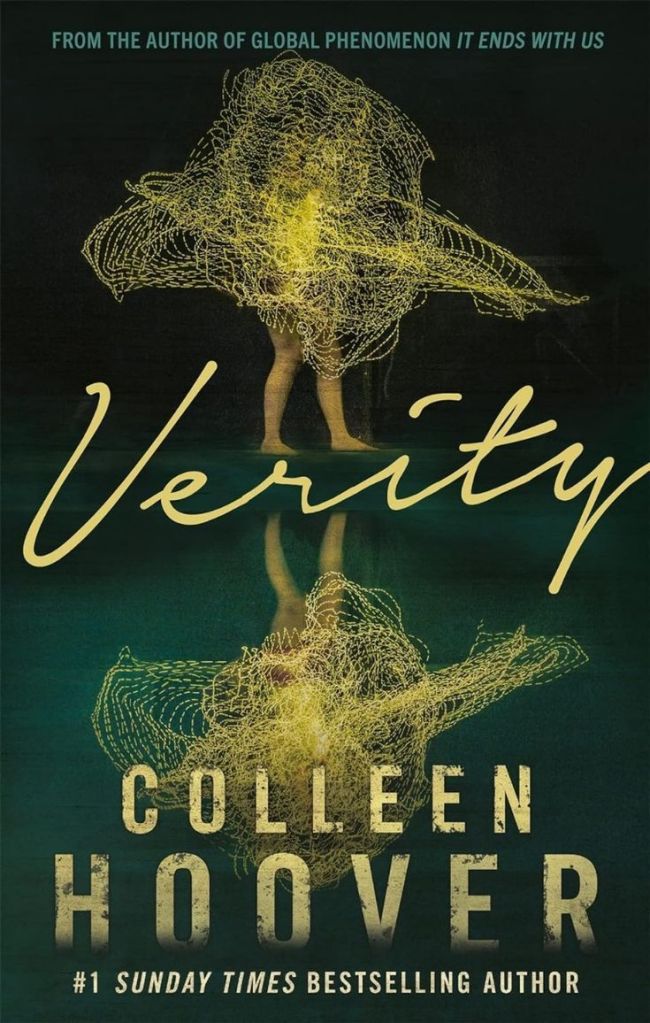
If you have not read Colleen Hoover's Verity and you plan to, I suggest you skip this particular blog post. It's filled with spoilers.

Why I Believe Verity’s Confession, Not Her Letter.

Some books entertain you. Some books disturb you…. And then there’s Verity by Colleen Hoover, the kind of book that crawls under your skin and refuses to leave.

I finished it, closed it, and sat still for a long time. And the more I thought about it, the clearer my position became: I am Team Manuscript. Not hesitantly. Not conditionally. Fully.

The turning point for me was the letter. On the surface, it offers an alternative explanation; a softer, more sympathetic version of Verity. It asks us to reconsider everything we’ve read. It wants to reframe her as misunderstood, wronged, maybe even framed by circumstance… But here’s the thing: it feels calculated.

I believe Verity wrote that letter because she knew Lowen knew. There’s a quiet awareness in that house. A shift in energy. Lowen had read the manuscript. She had seen the darkness. And Verity, silent and observant, sensed that something had changed.

That letter doesn’t feel like truth surfacing. It feels like damage control. It appears at exactly the right moment. It is conveniently tucked away. It offers just enough doubt to destabilize everything… plus, it was too neat and too reactive. If you are truly innocent, why wait until the walls are closing in to explain yourself?

Now here’s another thing, I Don’t Believe Jeremy Ever Found the Manuscript. This is where my conviction deepens. Jeremy is emotional. Protective. Impulsive. If he had read that manuscript before Lowen did, there is no version of events where life would have continued as normal, never. No quiet coexisting. No tense dinners. No careful routine. There would have been an explosion. Which tells me he never found it… it was hidden intentionally. Verity never meant for him to see it… And that makes the manuscript feel even more honest, because it wasn’t written for performance. It wasn’t meant to defend her. It wasn’t curated for sympathy. It was raw.

This next part is deeply personal. As a mum, I struggled with the argument that “no mother would ever write such horrible things about her child.” And I agree, no healthy mother would… But that’s exactly why I believe it. The manuscript doesn’t read like fiction. It doesn’t feel exaggerated for creative effect. It reads like a confession… Like something ugly and forbidden spilling onto the page because it cannot be spoken aloud. The vividness of it disturbed me. Not because it felt fake, but because it felt psychologically possible. Dark. Shameful. Real.

A letter trying to redeem oneself is easier to write than a confession admitting jealousy of your own child.

Then, let’s talk about the Knife. Why did it cut Crew? The knife doesn’t feel like a coincidence. It feels like an escalation in a moment of frustration.

What makes Verity brilliant is that Colleen Hoover never gives us certainty. She gives us discomfort. She makes us question our instincts. She makes us examine how easily sympathy can be manufactured and how fragile truth can feel when rewritten.

Well, after I ponder on the twists, the suspense, the shock value, I return to this: The manuscript feels like someone slipping and revealing who they truly are while the letter feels like someone scrambling to protect what’s left… And for me, that difference matters.

So Yes, I’m Team Manuscript

I believe the manuscript.. And that’s what makes Verity unforgettable. Because you don’t just finish the book. You carry the debate with you.

Image from Pinterest