
I Samuel 24 and 26, and II Samuel 1.
I’ve been reading the book of Samuel for some days and as if it’s my first time reading it, something hit me.
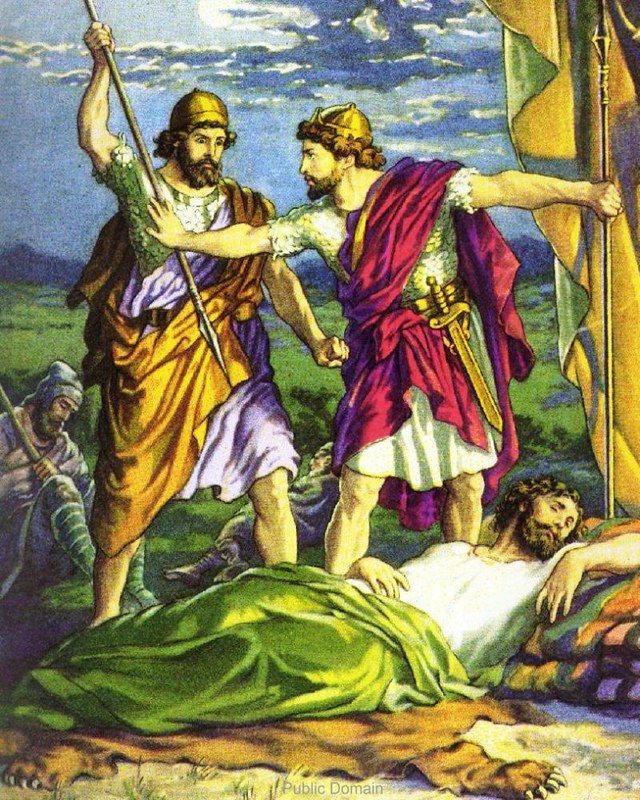
I see the story of David and Saul and how, time and time again, despite the fact that David did nothing wrong to Saul, Saul desired to kill him.
It’s written a number of times how David had Saul at his mercy but never touched him.
David always made it clear that he did not think it was right to strike or kill the anointed of God. He saw Saul in many capacities: as the anointed of God, as his master, and as someone whose life was not his to take. Despite everything Saul did to him, David did not think it was right to kill him because Saul was God’s anointed.
When we finish that part of the story and move into 2 Samuel, we see how a foreigner comes along and tells David that he has killed Saul. I believe this foreigner told David happily because he thought David would be pleased. After all, Saul had always wanted to kill David. He probably thought he was bringing David good news, perhaps even thinking he had done David a favour.
Little did he know that David would never have wanted Saul killed by his own hand or by another man’s hand in the way he described.
And this brings me to the point where I said something hit me.
Sometimes, people fight our battles for us, or we go about fighting other people’s battles for them. We assume we know what they want because we know what they have been through. We see someone hurting another person, and we decide to take matters into our own hands. We think we are helping, defending, or standing up for someone. But what if the person we are defending would never have chosen that course of action?
Not every battle we know about is ours to fight. And not every battle we fight on behalf of others is a battle they want us to fight.
We must be careful not to assume that because someone has been hurt, they must desire revenge. I beleive that sometimes, our idea of justice is not always the same as the convictions of the person we are trying to defend.
Then, secondly, David mourned when Saul died. It hurt him. And this is another thing that caused me to pause.
Sometimes, not everybody who has offended us is our enemy, or somebody we desire to take revenge on. Someone can hurt us deeply, and yet we may not wish them harm. We can acknowledge the wrong they have done without wishing for their destruction.
Saul had pursued David relentlessly, but David’s heart had not become so consumed by Saul’s actions that he could no longer recognise the significance of Saul’s life and position.
Saul was disobedient to God, but David did not consider it his place to take Saul’s life. He believed that Saul’s position as God’s anointed was not something he could disregard simply because Saul had wronged him. David left the matter in God’s hands.
This does not mean we should tolerate wrongdoing or refuse to protect ourselves when necessary. I just think that we must recognise the difference between protecting ourselves, seeking justice, and taking revenge.
David’s story reminds me that we do not always have to take matters into our own hands. Sometimes, restraint is a decision. Sometimes, walking away is a decision. And sometimes, leaving something in God’s hands may even be a good way to express our faith.

